Quick start
RouterVersioner is not a request-time dependency; there's no Depends() involved. It's a
one-time setup step: you build it, then call .versionize() once, and it reads the routers
you gave it and mounts one copy per version. Attach @api_version to every route before
calling .versionize(), since that call is what reads the router and wires everything up;
routes added to the router afterward are never picked up.
SemVer
from fastapi import APIRouter, FastAPI
from fastapi_router_versioning import (
    RouterVersioner, VersionFormat, api_version,
)

app = FastAPI()
router = APIRouter()


@router.get("/items")
@api_version((1, 0))
def get_items_v1():
    return {"version": "1.0", "items": ["a", "b"]}


@router.get("/items")
@api_version((2, 0))
def get_items_v2():
    return {"version": "2.0", "items": ["a", "b", "c"]}


RouterVersioner(
    app=app, routers=router,
    version_format=VersionFormat.SEMVER
).versionize()
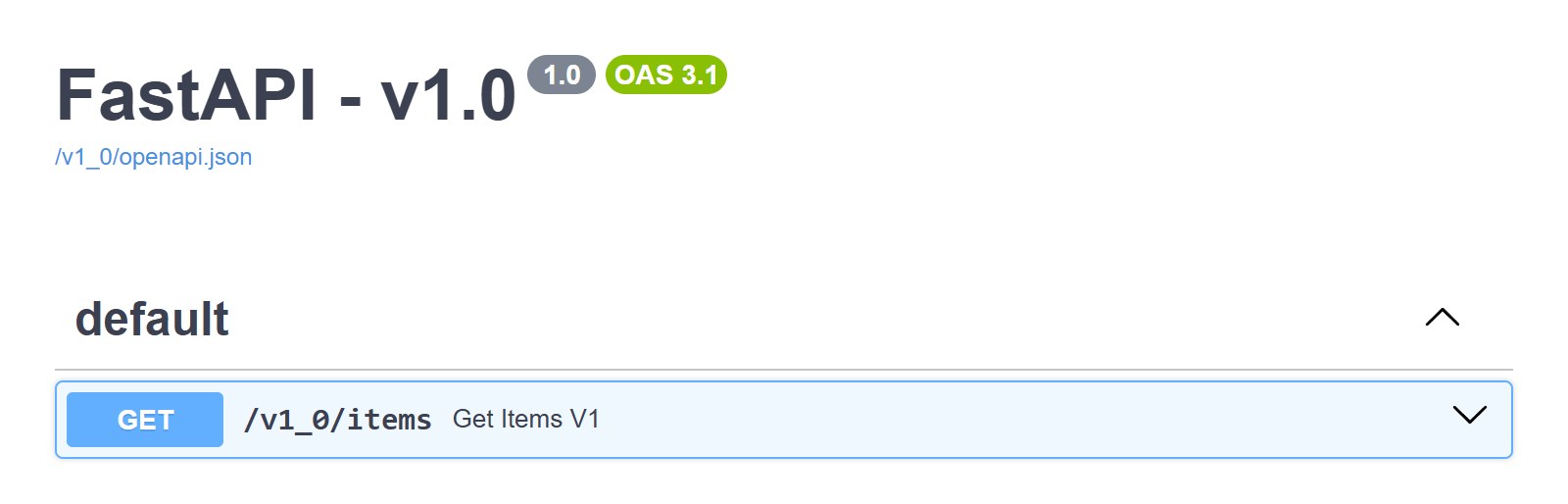
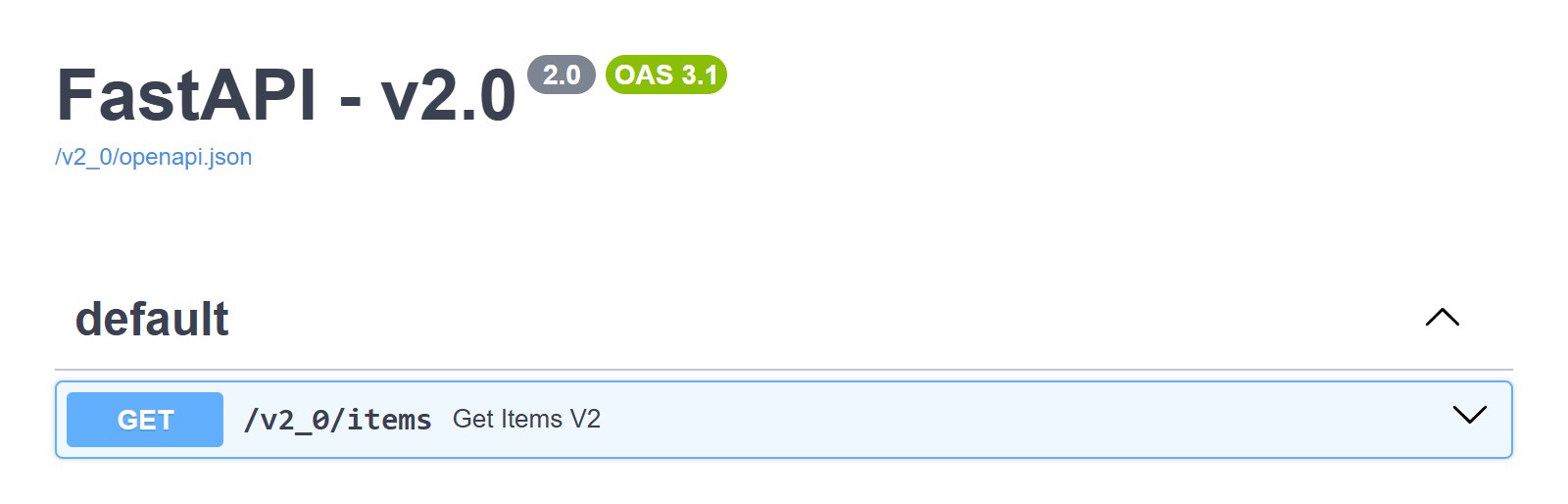
The routes are mounted under /v1_0/items and /v2_0/items, and each version has its own docs, at /v1_0/docs and /v2_0/docs, listing only the routes of that version:
CalVer
from fastapi import APIRouter, FastAPI
from fastapi_router_versioning import (
    RouterVersioner, VersionFormat, api_version,
)

app = FastAPI()
router = APIRouter()


@router.get("/items")
@api_version("2025-01-01")
def get_items():
    return {"release": "2025-01-01"}


RouterVersioner(
    app=app, routers=router,
    version_format=VersionFormat.CALVER
).versionize()
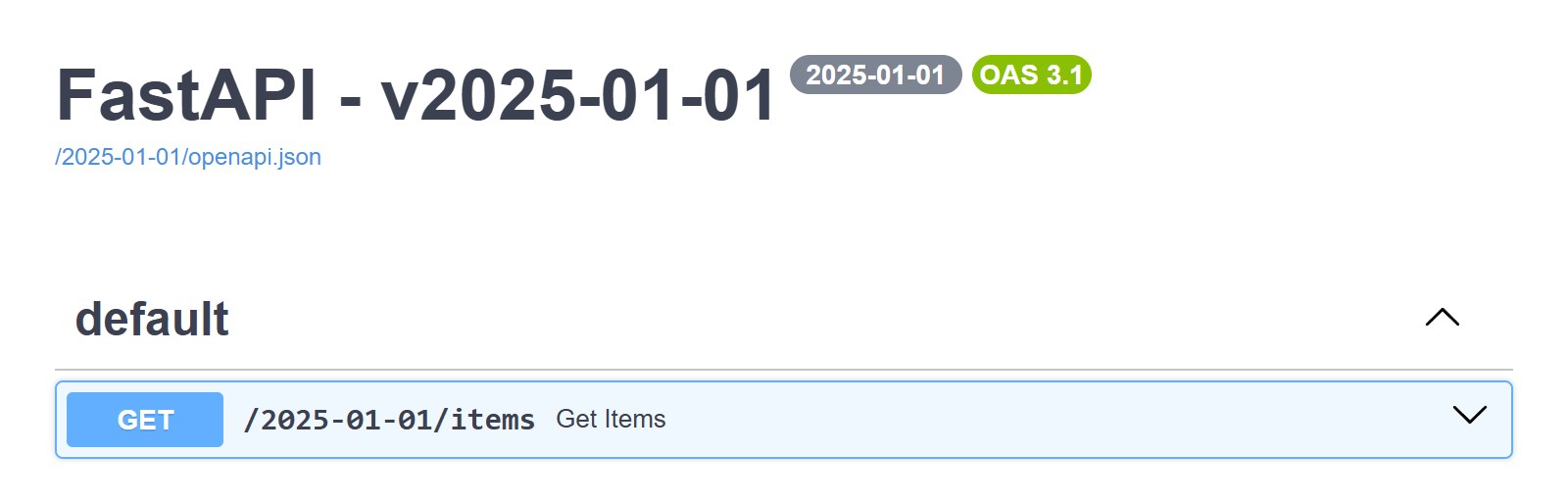
The route is mounted under /2025-01-01/items, with its docs at /2025-01-01/docs:
CalVer tokens can be any string ("2025-01-01", "v3", "stable"...), but they are sorted lexicographically to determine version order.
CalVer ordering
ISO dates and zero-padded numbers ("v01", "v02") sort correctly; unpadded strings like "v1", "v10", "v2" do not, and will place routes under the wrong version.